Style2

Style3[OneLeft]

Style3[OneRight]

Style4

Alcohol Addiction in Women

Alcohol addiction is more risky to women as compared to men. Read about the common causes of alcohol addiction in women, the warning signs of alcohol addiction and health risks associated with alcohol addiction to women.

Alcohol is one of the most addictive and serious health challenges for women. Even when consumed in moderate quantities it affects women drastically and differently as compared to men. Certain research studies have indicated the possibility of heavy drinking being far more risky for women than it is for men. The purpose of this article is to highlight how alcohol can impact a woman’s health and safety.

At the outset it is important to understand that no amount of alcohol consumption is safe for women in general. The manner in which alcohol affects men and women is not the same. Further, women who are addicted to drinking have higher death rates because of suicide, accidents, and other mental health related issues.

Why do Women Drink?

Most of the reasons for women taking alcoholic drinks are almost the same as that of men- to relax, to gain confidence in social situations, sleep better and to relieve stress.

Some of the other reasons why women drink alcohol are as follows:

Relationship Failures - Women are more likely to drink if they have issues with their close relatives like spouse, children or parents.

Single Woman – Alcohol addiction is more common in women who are unmarried, divorced, or separated. Similarly women who have been sexually abused are more likely to drink as compared to normal women.

Spouse - Women whose husbands are addicted to drinking get hooked to alcohol easily. Women may start initially with a small peg to give company to her spouse and can gradually increase which may result in permanent addiction.

Health Risks of Alcohol Addiction to Women

Here are some of the health risks which can be caused to women addicted to alcohol.

Excessive alcohol consumption is not advisable for both men and women. Some of the related risks associated with alcohol consumption by women include:

Cancer - Risk of cancer of the breast, neck and head increases significantly in case of women who drink alcohol regularly

Brain Damage - Alcohol is capable of destroying brain cells and women are more susceptible to this effect of alcohol as compared to men.

Fertility and Conception - Alcohol can impact a woman's fertility or ability to conceive. Further, alcohol consumption during pregnancy can affect an unborn child also. During pregnancy it is absolutely unsafe to consume alcohol as it may adversely affect the unborn baby.

Psychological Issues - Mental depression, insomnia and heart failure are common in women drinkers. Women who drink are more susceptible to becoming victims of sexual assault or such other acts of violence.

Warning Signs of Alcohol Problems

If you cannot keep away from alcohol even for a single day you may be addicted to alcohol without realising it. The risk of developing an alcohol addiction is higher if you or your family member has a history of alcoholism. Some warning signs of alcohol addiction to look out for include:
  • Drinking more than seven alcohol based drinks per week.
  • Urge and desire to drink alone or early in the day. In extreme cases the urge may turn into desperation.  
  • Missing work, college or school because of the desire to drink or previous day hangover.   
  • Driving under the impact of alcohol.
  • To get a pleasurable response drinking more alcohol than the normal quantity that you may be used to. 
Although the risk of consuming alcohol is very high there are certain benefits associated with moderate consumption by women over the age of 55. For example if you happen to be over the age of 55 having one drink a day can lower your risk of heart disease. Having one alcoholic drink per day is considered to be moderate drinking. However, it is important to bear in mind the fact that alcohol offers no health benefits to women younger than 55 years of age. Additionally women who drink beyond moderation may increase their risk of heart disease.

Hair Care In The Rains

The rains bring respite from the heat of the summer but can leave you frustrated when your hair refuses to behave and stay in style. However, by following a few simple tips, you can manage to keep your hair problems to a minimum and look good.

Do not wash your hair too often 
There is nothing better than a nice bath when you just get in from the pouring rain. However, washing your hair too often, say every day, can exaggerate the problems you already face. Washing your hair two or three times a week will keep your hair clean and looking good. At the same time, it prevents excessive drying of hair and keeps frizziness to a minimum. Also, do not forget to condition your hair after every wash; you could use a leave-in conditioner to make dry hair more manageable.

Protect from moisture 
Excessive moisture is the biggest culprit during this season. It affects your hair even if you remain indoors, especially on days when the humidity is high. Depending on your hair type, it may leave your hair frizzy or flat. Hair that is fine, wavy, or curly usually tends to absorb the moisture in the air. This makes fine or thin hair fall flat, but people with wavy or curly hair end up with frizzy strands. The best solution to this is to use a humidity-protective gel before styling. These gels help by forming a protective coat over the hair cuticle and preventing moisture from getting in. 

You can also follow up with a non-sticky hairspray for extra protection. It is better to use an aerosol, since it gives out a fine spray. A spray with a regular nozzle can give out too much of the product, which can result in clumps of your hair turning sticky later on in the day. Try not to use more than four different hair care products at a time. This will save you time. A normal routine would be to use a shampoo, followed by conditioner, styling gel, and hairspray.

Do not experiment too much 
On rainy and extra-humid days, it is usually better not to force your hair into a style that does not feel right. For example, do not attempt to curl hair that is fine and limp or straighten hair that is naturally curly. This is because even a small amount of moisture absorbed by your hair will make it revert back to its natural texture, and your efforts will be in vain. Instead, try and make the most of your natural hair texture by adopting a style that suits you. Rub a generous amount of gel through curls for that tousled look. For fine and straight hair, pulling it back into a ponytail or braid works best.

Choose hair care products wisely 
Frizzy hair is usually dealt with by using hair cream or similar products to smooth it down. But this can have an adverse effect, by allowing your hair to absorb moisture and making it look greasy or sticky. During the rainy season, it is better to stick to alcohol-based creams and gels since they have a drying effect on hair. Leave moisturising products for use in the winter months.

Accessorise 
If you cannot quite get your hair to behave the way you want it to, do not fret. The right accessories can not only cover up a bad-hair day but can also make a fashion statement. A colourful scarf can cover up most of your frizzy ends, while a funky hairband works for shorter hair. If all else fails, just grab a hat for that slightly bohemian look. 

With so many ways to keep your hair looking and feeling great even when it's wet, it is time for you to go ahead and enjoy that rain dance!

How Get Rid of Plantar Warts

It's no secret that plantar warts can be very painful and uncomfortable. Truth be told, it's probably because of the pain and discomfiture that you're searching for ways to get rid of the warts. The good news is that there are several different plantar warts treatment options for infected individuals to use to eradicate the wart menace completely. Some of them are scientific remedies while the rest are home made treatments. Please note that these types of warts respond differently to various treatments and sometimes one is required to seek new alternatives if a particular drug or option does not yield satisfactory results. Below is a short list of home remedies that have been known to work wonders in clearing up warts of the sole.

Apple Cider Vinegar

Although it has not proven to be successful to all, a large percentage of individuals suffering from these warts have recorded impressive results using this remedy. So, how does it work exactly? It's actually very simple. Just soak the affected area for about half an hour everyday in apple cider vinegar after which you take wool of appropriate size, soak it in the solution and tape it on before you go to bed. The level of success varies from person to person.

Finger Nail Polish

This is another unconventional method of treatment that has proven time and time again to be powerful in clearing these warts. It is not known by many but a substantial number of people who have tried it have highly recommended it as a cheap and effective plantar wart home treatment option.  So, how is it used? For affected individuals, simply buy nail polish and smoother it on the affected area every day. Apparently, the wart will start to diminish and eventually disappear.

Tea Tree Oil

The use of tea tree oil is perhaps the most common of all the plantar wart home treatment remedies. So, how does it work? Those who have experienced success from using this mode of treatment have indicated that they rub the infected warts with tea tree oil then cover them up with  tape. This is done on a daily basis and eventually the warts  start to shrink and eventually clear out leaving the foot as it once was.  It is said to be very effective. If you're suffering from these warts and you're considering using this treatment then its best you know that the oil can cause a rash, swelling or even excessive itching. In such cases it is important to discontinue treatment at once.

Credit : Eric Ogero

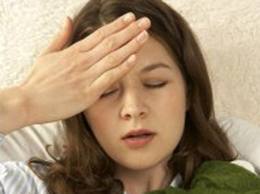
Tips to Get Rid of Fever


Fever is a good thing. It's your body's attempt to kill off invading bacteria and other nasty organisms that can't survive the heat. The hypothalamus, which is the body's thermostat, senses the assault on the body and turns up the heat much the way you turn up the thermostat when you feel cold. It's a simple defense mechanism, and the sweat that comes with a fever is merely a way to cool the body down.

The most important thing though is to keep body fluids flowing. Like in heat exhaustion and heat stroke and other similar ailments, when the body temperature goes up, the more fluid it uses. So, although inactive and lying in bed, one can still become dehydrated with a fever. To prevent dehydration during a fever, body fluids need to be replenished. The average adult should drink about 10 glasses of water per day, more than the usual average. Children should strive for 6-10 per day. If your fever is the cause of another illness, such as the cold or the flu, water is equally important in flushing out the body of the "bug" that is causing the illness.

A fever isn't a disease. It's a symptom of an infection, typically caused by a cold or the flu. When you have a cold, for instance, your immune system signals to your brain that it needs more body heat in order to attack infectious cells, and your body temperature rises.

Steaming the body with water to which khus khus (poppy seeds) is added causes perspiration and brings the temperature down. Water boiled with khus khus may be used as a drink in feverish conditions.

Holy Basil (Tulsi) is another equally effective home remedy for fever. You can boil it in 2 cups of water and drink it. You can add some honey when boiling it. 

Normal body temperature ranges from 97 to 99 degrees Fahrenheit, but varies throughout the day. Usually is lower in the early morning and higher in late afternoon. A fever is consider to be any temperature above 100 degrees Fahrenheit. One should get concern when temperature raises above 102 degrees Fahrenheit for an adult and 103 degrees Fahrenheit for children.

The leaves of holy basil are one of the most effective of several home remedies in the treatment of common fever. A decoction made of about twelve grams of these leaves, boiled in half a litre of water, should be administered twice daily with half a cup of milk, one teaspoon of sugar and a quarter teaspoon of powdered cardamom (chhoti elaichi). This will bring down the temperature.

Drink lots of water to compensate for the loss of body fluid. This will also help to reduce the body temperature. To immediately reduce high body temperature, boil powder of 2 to 3 tsp dry roasted fenugreek seeds. Strain the water and add a drop of ghee to it and drink. Drink juice made out of sweet basil leaves twice or thrice a day. Prepare linden tea by boiling 1 tbsp of linden flower in 1 cup of water and drink it hot. Brew willow bark tea and drink it by taking small sips. Willow bark has some aspirin related compound. If you are not comfortable with it then use black elder.

Put an ice pack on your forehead. This also cools you down temporarily. Or, soak a washcloth in a bowl of cool water. Then bring it out and place it on your forehead. This will help your body to lower it's temperature, thus reducing the fever faster.

Credit : Peterhutch

Wedding Hairstyles For Short Hair

Wedding ceremony is a memorable day of everybody life. Everybody wants to look perfect and different from other on this day. This event includes many small decisions like wedding dress, wedding hairstyle, jewelry, cosmetics etc. but wedding hair styles adds charm to bride and grooms personality.

So if you want to look perfect on your wedding ceremony then you have select hair style which is suits on you. In selection of hair styles some important factor should kept in your mind. Firstly comes the structure of your face there are many structure of face like oval, round, square, straight and heart shape. Face shape decide which hair style suite on you. Whether you are confused to selecting your hairstyle then you can take suggestion from the hairstylist. Hairstylist will guide you which hair style will suits on your face.

Secondly the wedding dress which you are wearing on this occasion. Wedding dress also help you to decide which hair style suits you. If you are wearing strapless wedding dress then you consider your hair curly and fall backwards. But if you are wearing high neck dress then make a bunch of hair on the scalp region. It will increase your gloom in the wedding ceremony.

Now here are some famous wedding hair styles for you which increase your personality on wedding day.

Queen look hairstyle – All the hairs are pulled backwards and curled on the top region. Before finishing decorate you hair with headband.

Princess hairstyle – All the hairs are pulled backward and make bunch of hair at the top regions and just add some curls on the top. Before finishing decorate with tiara.

Elaborate Curly hairstyle – All the hair are pulled backwards and curls make this undo neat which make you look gorgeous. Another thing makes an accurate balance between curls size and rose’s size.

Refined Piecey hairstyle – All the hairs are fully curled and some hairs are fall right towards face and other are fall backwards touching shoulder. Before finishing decorates your hair with Tiara it looks cool and gorgeous.

Updo Hairstyle – This is a very traditional and easy hairstyle you can do it at your home without any help of hairstylist. All the hairs are pulled backwards and make a bunch of hair at the scalp region. Before finishing decorate your hair with pearl tiara.

Medium Curl – Some hairs are straight and fallen above eyebrow and other hairs are fallen backwards touching neck by striping with hair band. You can do little curls in backward region hair. This hairstyle has three parts: - the straight fringe, the wrapping crown and the long hot curls down.

Today if you want to known which hair style is in fashion read magazine, see TV because women are very much concerned, they want to look gorgeous, cool, glamorous, stunning and sexy.


Credit : Bella Mclaine

Pedicure at Home in 5 Easy Steps

You will need: Nail clippers, cotton pads, nail polish remover, cuticle cream, a nail file, a loofah, a good foot scrub and moisturiser

Step 1:

First, you need to trim and shape your nails. Remove your old nail polish with the nail polish remover and trim your nails neatly. Make sure you cut straight across and don't cut the corners too much, as this can lead to painful ingrown nails. Use a nail file to give them the desired shape.

Step 2:

Give your feet a nice foot bath. In a basin or tub, fill warm water enough to cover up to your ankles and add some bath salts. You can also add a few drops of any essential oil of your choice. Also add a few smooth pebbles to the water. These will provide a gentle massage as you place your feet on them. Soak your feet and relax for 15-20 minutes. Dry them with a towel.

Step 3:

The next step is exfoliating. Once you are done with the foot bath, dry you feet and rub some cuticle cream on the base of each toe nail. Leave it for a few minutes. In the meanwhile, using a foot scrub and remove all the dry and dead skin cells. Be firm but do not scrape too hard. Next, wipe off the cuticle cream and push back the cuticles gently with a cuticle pusher.

Step 4:

Once you are done scrubbing, wash your feet clean and moisturise them. Moisturising helps soften, hydrate the skin and protects it from cracking. Rub a generous portion on your feet and massage well. Regular foot massages also help keep nerve endings stimulated, improve blood circulation and nourish the skin and foot muscles!

Step 5:

Now your nails are ready to get decorated. Paint them with a colour of your choice. Always apply a base coat. Wait for it to dry and then apply a coat of nail polish. Let it dry completely before you apply the next coat. This will make your nail polish last longer. You can also jazz your feet up with a pretty anklet or toe rings!

Top Ten Safety Tips For Women Travelers

Is it safe for a woman to travel alone?Generally, yes. But, this is a relative question. Is it safe to walk around alone at night where you live now? What is the crime rate in your community? The key is to always be aware of your surroundings, don't walk down dark alleyways at night, and don't wear expensive looking jewelry, etc.

Most of the follow seems like common sense, but not everyone thinks about these things while traveling. It is easy to take safety for granted when you are familiar with your environment.

10 Everyday Basics When Travelling Alone
  • Take just enough cash for the night if you do go out.
  • Don't dress provocatively. Try to follow custom as much as possible. This means being conservative where appropriate.
  • Familiarize yourself with customs of locals/country before you go.
  • Try to find someone to go with you if you do go out for a few drinks or dancing for the evening.
  • Always take a taxi after dark.
  • Never leave your drink unattended.
  • No short shorts/ skirts in developing countries, and wear a bra. Seriously. Local women may find 'freedom of expression' in this manner to be offensive to their children and families. Also, you could draw unwanted and potentially dangerous attention to yourself. It happens. A lot.
  • Seems obvious but, don't hitchhike.
  • Study maps if you go out in the evening. Know where you are going and try not to appear lost. This makes you an easy target.
  • If you do become lost or disoriented, duck in to a business or ask for help from a woman older than yourself. It helps if you can speak some basic phrases in the language.
Again, same precautions you use at home if you live in a city, and double your awareness in your environment. Buy pepper spray if you can get it when you get to your destination country. Even during the day while on public transport-beware of people that have shiny shoes and pamphlets that describe what they are doing for their communities with a nonprofit, or anything that seems out of the ordinary. A lot of these are scams, or worse, will endanger you if those running the scams lure you into a physical space. This is by no means an exhaustive list but you get the idea. Stay safe and have fun!

Credit : Xochi Green

How to Get Rid of Facial Hair

There are many ways of removing facial hair. The method should be chosen according to quantity or thickness, location and rate of growth. Read on to find out more

Temporary methods of facial hair removal

Plucking
This method involves the use of tweezers and removes hair from the follicles. Therefore, re-growth takes time. Plucking is suitable for stray hairs on the chin, between and under the brows. It should not be used for hair on the upper lip. The area should be first wiped with cotton wool, soaked in a mild antiseptic solution. One should also take care not to pluck out hair from a mole, before consulting a doctor.

Threading
It's the most common method of removing facial hair. The disadvantage is that the effect is temporary and the procedure has to be repeated periodically. It is useful for areas like the upper lip and the eyebrows. In fact, threading is done to shape the eyebrows. Frequent
threading can cause skin irritations. On sensitive skins, there can be redness or a rash. Avoid threading on areas with eruptions, like pimples or acne. A zinc ointment or ice can be applied to soothe the skin.

Waxing
Many beauty salons offer "katori" waxing for facial hair. Cold wax would be safer for the face. Waxing strips are available. However, large areas of the face should not be waxed. It would be good for smaller areas like the chin, area above the lips or sideburns. For excessive facial hair, many women use a combination of methods, like threading chin and area above lips and bleaching the rest of the face. Or, threading chin and upper lip and waxing sideburns.

Epilation
An epilator is a small gadget for hair removal. Epilators for facial hair are different from the ones for body hair. The effect lasts for about 4 to 6 weeks. Epilators pull out the hair by the roots. It is said that the smallest hair can be removed with an epilator. There is
some initial pain, which may decrease gradually.

Electrolysis
Although this is said to be a permanent method of hair removal, re-growth can occur. In electrolysis, the diathermy method was common. It involves the use of fine needles, through which an electric current is passed. But now a new procedure is being used, known as transdermal electrolysis, in which needles are not used. Also, superfluous hair
can be removed from larger areas.

In the earlier method, needles were introduced into the hair follicle to cauterise the hair root. This checked re-growth. It is extremely important to make inquiries, as scarring can occur in the hands of an unskilled operator.

Laser
This is the latest method of permanent removal of facial hair. Laser produces an intense beam of light, which is absorbed by the hair follicles. The laser disables the hair follicle's ability to produce hair. Cooling devices are used to prevent damage to the rest of the skin. The advantage of laser over electrolysis is that the laser light can scan broader areas. Therefore, fewer sessions are required. However, it is more expensive than electrolysis. Re-growth occurs in some cases, but is slower and scantier. It is very important to find a good laser clinic. The temporary known side effects are redness, swelling and itching. The main risk in laser treatment is the possibility of skin burns. So, before choosing the clinic, it is essential to find out its reputation, by making inquiries and talking to people who have been through the treatment.

Home remedies
For very fine hair, scrubs and exfoliation can help. This would discourage hair growth over a period of time, if used regularly. Make a thick paste of sugar, lemon juice and water and apply it in the direction of hair growth. Wash off when it dries. Apply it once or twice a week. Apply a paste of turmeric powder and milk and rub this on the skin with a circular motion. It is said to discourage facial hair, but it may leave a yellowish tinge on the skin.